
From 3314 Frames to One Solar Image: Why Global Shutter Matters in Solar Imaging
Published on July 9, 2026 by The Imaging Source.
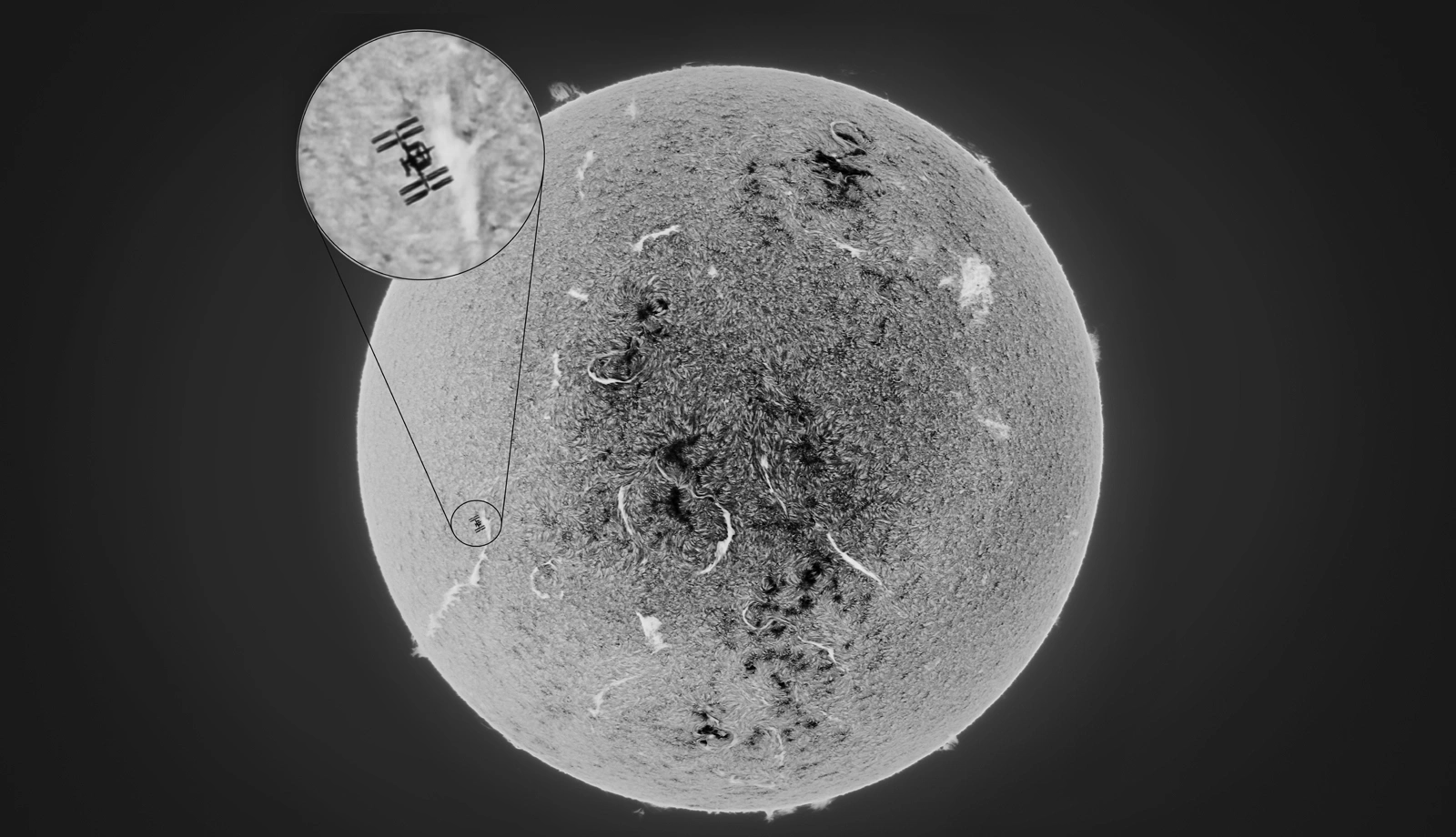
Capturing high-resolution images of the Sun presents a unique imaging challenge. Unlike deep-sky imaging, sunlight is abundant, but before reaching a telescope it must pass through Earth's dynamic atmosphere. Constantly shifting air distorts fine solar structures, making sharp images surprisingly difficult to obtain. Astronomers overcome atmospheric turbulence by recording thousands of extremely short exposures and combining only the sharpest images through a process called stacking. Because hundreds of short-exposure images must later be aligned and combined into a single result, preserving accurate image geometry throughout the acquisition process is critical. This is where Global Shutter technology provides a distinct advantage.
When evaluating camera options for its new H-alpha solar imaging system, the Fritz Weithas Observatory in Neumarkt, Germany focused not on a single specification, but on how each camera characteristic would contribute to the final image.
Why Global Shutter Matters
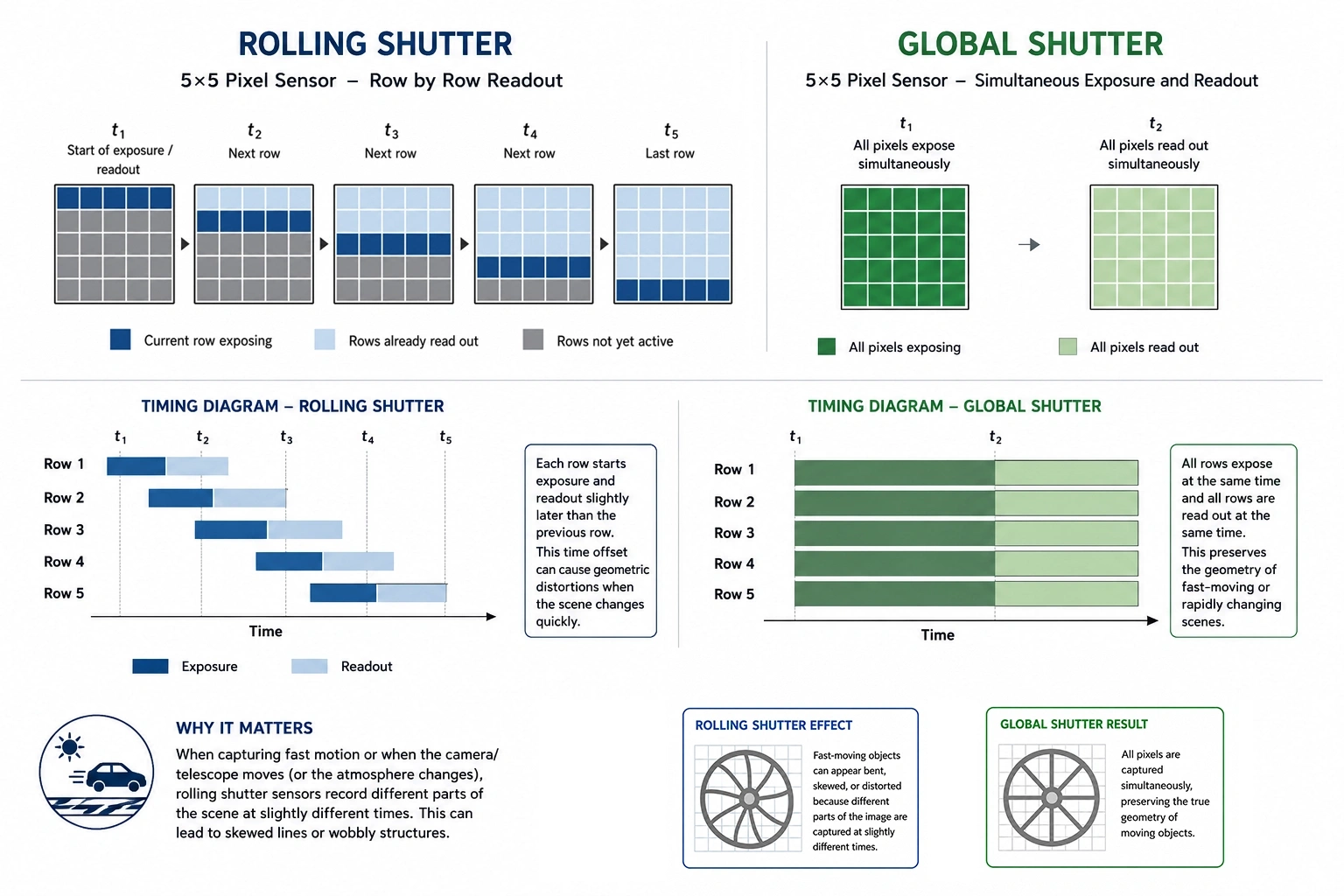
The final, and ultimately decisive, criterion was the sensor architecture itself. Rolling Shutter sensors read an image line by line and are often used in astronomy cameras for deep sky imaging. The downside of this line-by-line readout is that rapidly changing scenes, or in this case, images affected by atmospheric turbulence may exhibit subtle geometric distortions. A Global Shutter exposes every pixel simultaneously. The result is a more consistent image sequence that can be aligned and stacked more effectively, allowing fine solar structures to be reproduced with greater precision while minimizing the effects of atmospheric turbulence in the final image.
Choosing the Right Camera for the Job
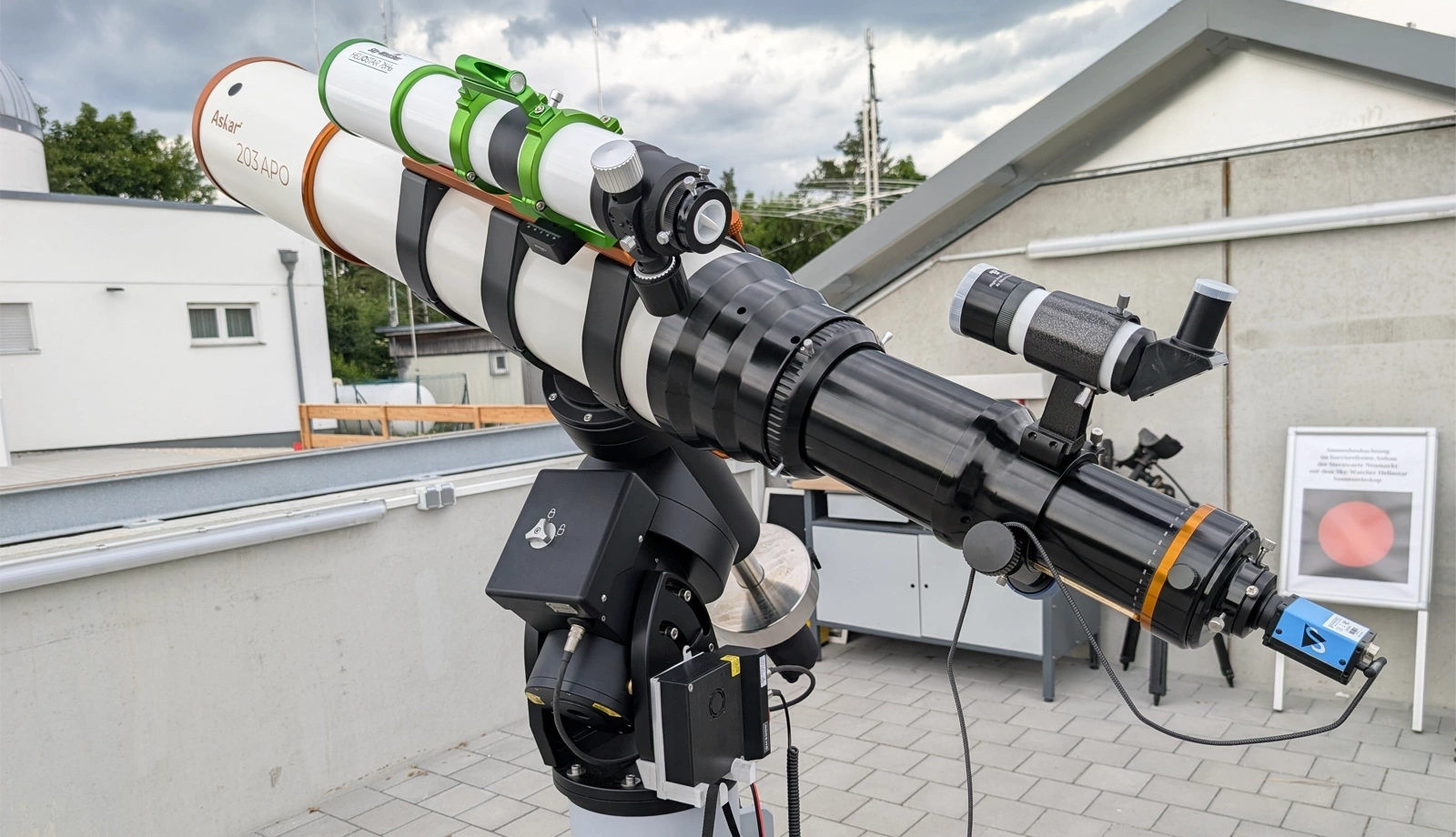
Beyond Global Shutter technology, the observatory also needed a sensor format that matched the optical setup of its new Heliostar 76/630 telescope. The goal was to capture the entire solar disk without creating image mosaics. A 1.1-inch sensor provided the required field of view while preserving the telescope's full image circle and enough resolution to reveal fine solar structures. The observatory selected a monochrome sensor to maximize sensitivity and image detail. Without a Bayer color filter array, monochrome sensors offer higher sensitivity and maximum spatial resolution which produces ideal images for astronomy post-processing work.
These requirements ultimately led the team to The Imaging Source's 20 MP DMK 38UX541, combining a 1.1-inch monochrome Sony IMX541 sensor with Global Shutter technology.
 From Thousands of Frames to One Image
Solar astronomers deliberately capture thousands of images knowing that only a small percentage will represent moments of optimal atmospheric stability. The challenge is therefore not simply acquiring data but selecting the very best data from thousands of possibilities. During one of the observatory's first recording sessions, the DMK 38UX541 captured 3314 images in just 85 seconds using an exposure time of only 1/4000 second.
Even before stacking, the camera's live image made a strong impression. A member of the observatory team remarked, "Even the live image on the monitor showed a level of detail we had never experienced with any previous camera."
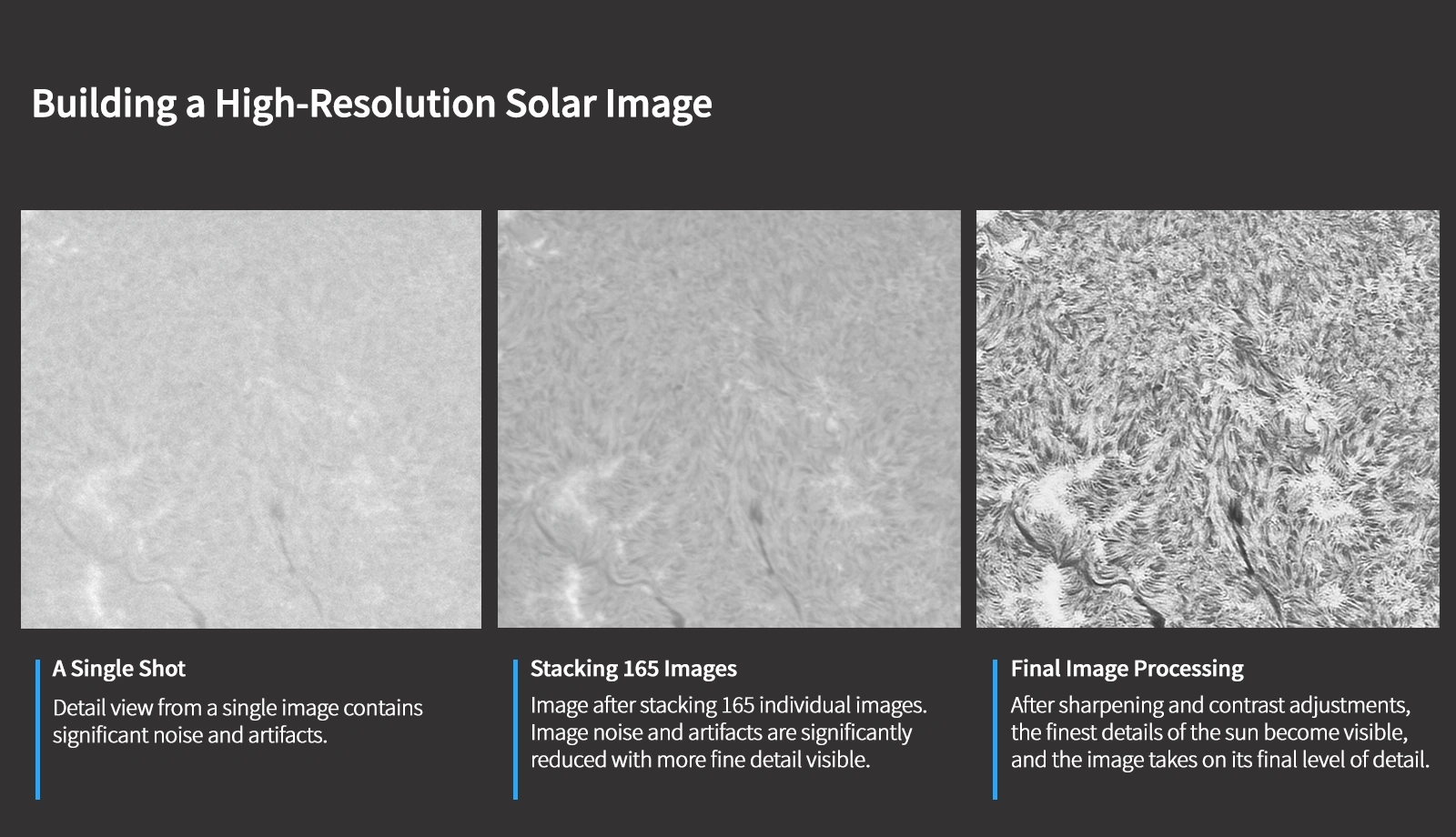
Because atmospheric turbulence continuously affects image sharpness, specialized stacking software evaluates the complete image sequence and selects only the highest-quality frames. In this case, only around 5% of the captured images (165 frames) were used for the final stack. The resulting image exhibits significantly reduced noise and serves as the foundation for subsequent sharpening and contrast enhancement. Only after these additional processing steps does the image reveal the fine solar structures visible in the final result. The image below shows the three main processing steps from a single raw image to the stacked intermediate result, to the fully processed image.
Industrial Imaging Meets Scientific Imaging
At first glance, inspecting products on a production line and photographing the Sun appear to have little in common. Yet both begin with the same objective: capturing the most accurate image data possible. Whether the goal is measuring a manufactured part or revealing fine solar structures, image quality depends on the same fundamentals: precise sensor timing, accurate image geometry and high-quality raw image data.
The experience of the Fritz Weithas Observatory illustrates how technologies developed for industrial imaging can also offer possibilities in scientific observation. Different applications, different objectives but ultimately the same pursuit: extracting as much information as possible from every captured photon.